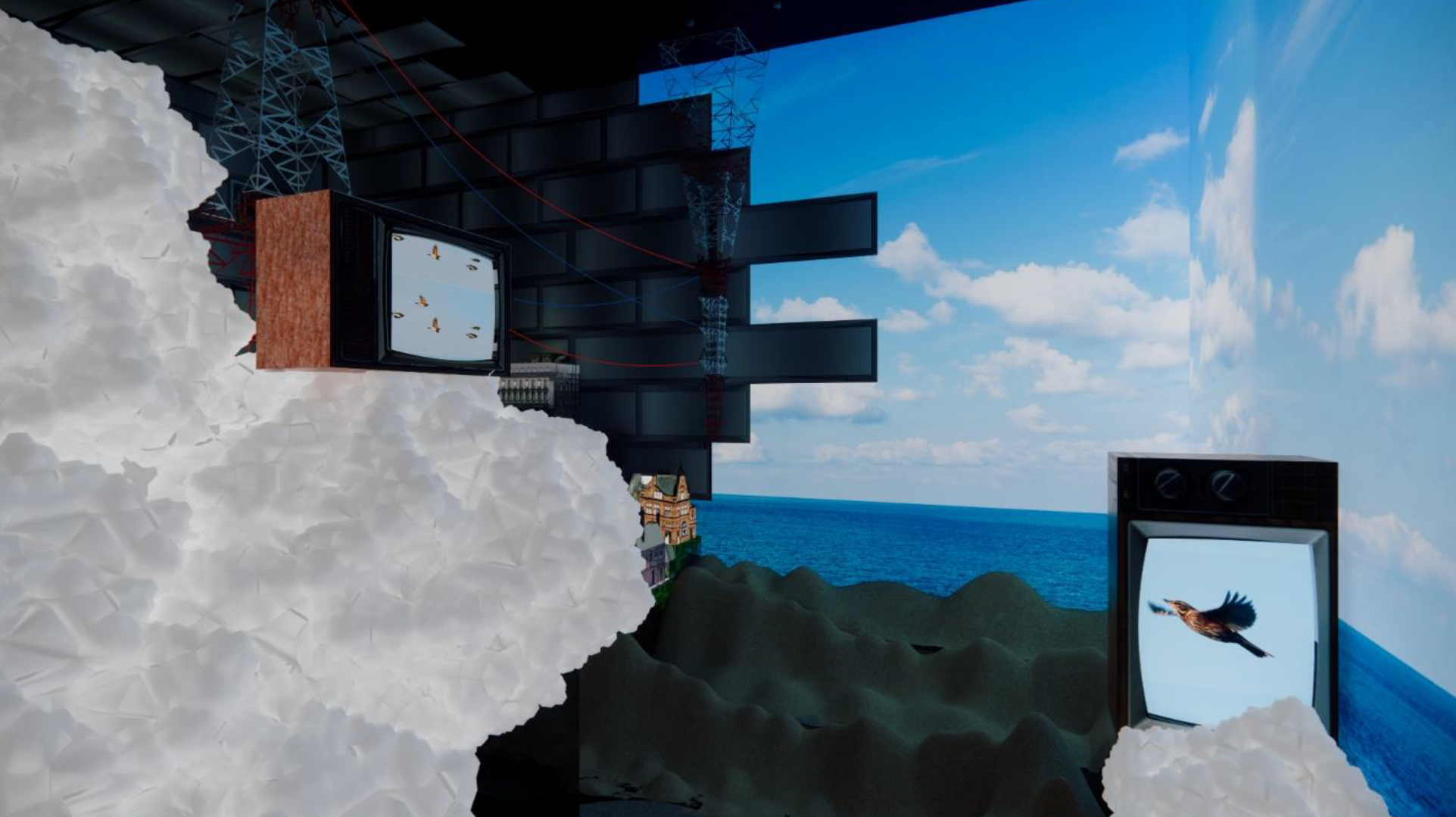
Tapping the Invisible

Tapping the Invisible
Anika Sethi
Electromagnetic fields are everywhere and imperceptible, produced by power lines, urban infrastructure, and the living pulse of the Earth itself. They pass through concrete, skin, and atmosphere without a trace. To human senses, they do not exist. For the Redwing bird or any bird navigating by cryptochrome-mediated magnetoreception, they are the primary medium of perception, a navigational compass refined over millions of years and now it is under an accelerating strain. A century of expanding electrical infrastructure has saturated the electromagnetic landscape, introducing noise into a system with no tolerance for it.
The research begins with a single question: What do these birds experience while migrating that causes them such misery? Electrical Substation Site in Glasgow, a concrete box hidden among the trees that generates electromagnetic fields that extend far beyond its walls, asks how the invisible might be made spatially legible and the ethical and ecological responsibilities that legibility demands.
 The project operates across three registers simultaneously. As a speculative design, it proposes a space where the electromagnetic field is translated into a sensory experience for humans to witness. As an ecological provocation, it argues that existing standards of human-centered architectural thinking render non- human electromagnetic perception invisible, and that this invisibility is neither neutral nor harmless. As a research methodology, it mobilizes analog and digital experimentation, such as iron-filing studies, water-ripple interference mapping, EMF field recording, and their visualization, to inform spatial and atmospheric decisions that drive the design.
Throughout, humans occupy the position of the observer: present in space but not at its center. This positions the project as Human-Observational: humans may enter and experience space, but the design logic, material selection, and atmospheric conditions are generated entirely by non-human electromagnetic perception, not by human comfort or occupation We are witnesses to a perceptual world that belongs to the birds: present in the space, but moving through it as outsiders to the electromagnetic experience it translates on their migration journey to Glasgow.
What you hear and see in space is not a metaphor. It is a translation.
The Elderslie Street Electrical Substation in Glasgow is a Strange Strangers in the Mesh, a concrete box hidden among trees. One might wonder why I dwell on this. My reflection was sparked during a visit to the site nestled among lush greenery. What drew my attention was not the visible but the thing we couldn’t see. Most people walk past it every day without giving it a thought. But this infrastructure is generating something invisible, massive, and utterly strange: electromagnetic fields that extend far beyond these walls, connecting this site to the national grid, to Earth’s magnetosphere and to our brains.
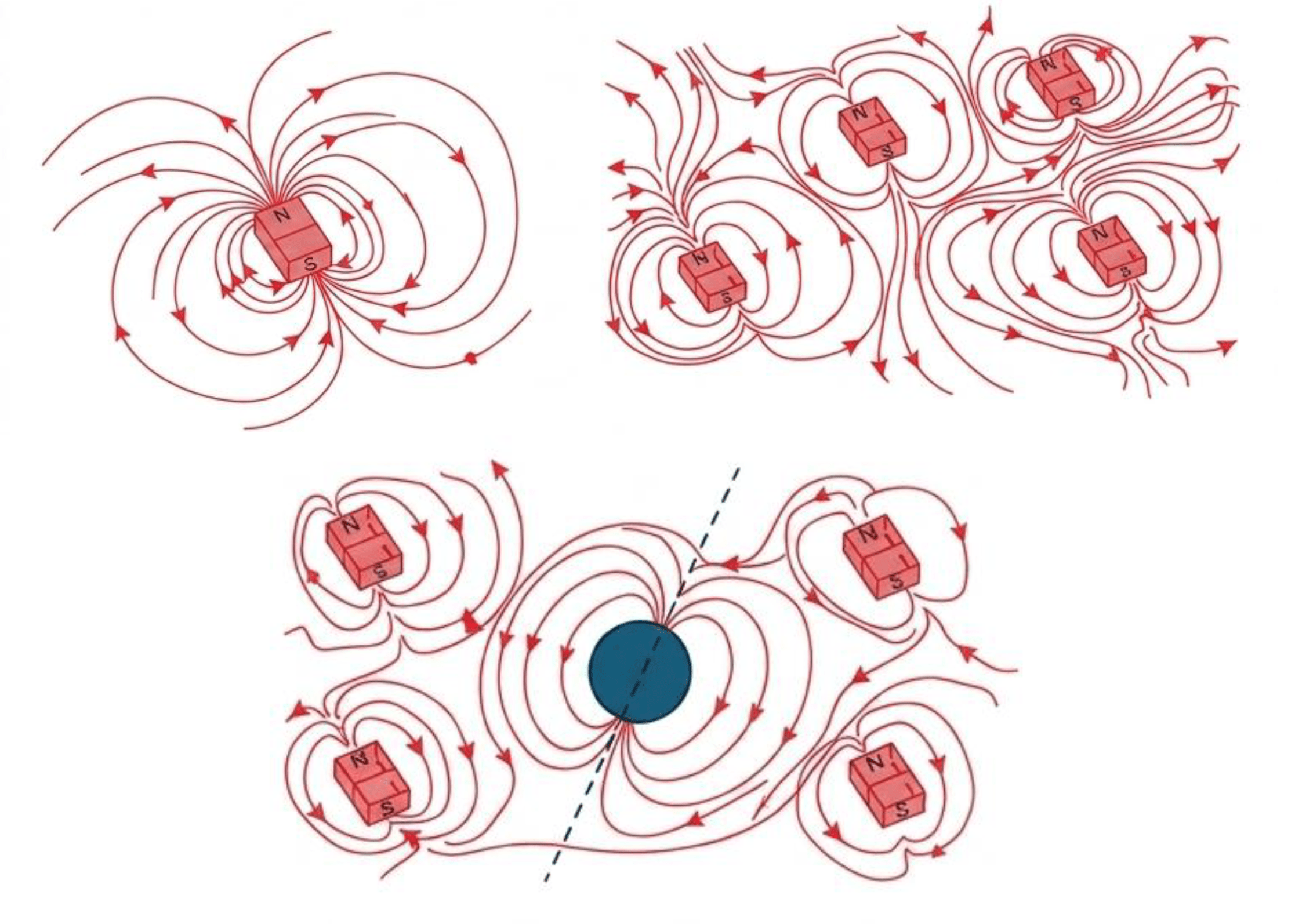
To analyze the spatial behavior of the EMF, I conducted an experiment with magnets and iron filings, since anything that carries an electric current or is electrically charged generates its own electromagnetic field, which made the geometry of magnetic field lines visible. The characteristic looping paths between poles, the zones of density and sparsity, and the way field lines cluster at sources and disperse at a distance. These patterns, which birds render as visual overlays, became the generative geometry of how the Chamber’s interior is navigated organizationally: zones of intensity and calm that do not follow the logic of walls or rooms.

The Translation Helmet operates on the same principle as the EMF field recording device developed during the research phase. At its core is a hand-wound copper coil antenna that functions as an inductive sensor. When the coil moves through or is held stationary within an electromagnetic field, the fluctuating field induces a small alternating current in the coil. This current is amplified by a custom battery-powered amplifier circuit before being passed to an audio output (earphones integrated into the helmet) and the same sound signal is converted to a visual output (a small semi-transparent screen in the helmet’s visor) by programing the interferences into the speculative EMF wave patterns visible to the birds.
The audio signal renders the EMF interference as sound: the 50Hz hum of alternating current from the substation’s transformers forms the baseline, with fluctuations in electrical load producing the bursts and drops in frequency that the wearer hears as the helmet moves through different intensity zones. The visual signal drives a generative pattern on the visor screen, when electromagnetic interference is low (the sky zone, the reflection zone), the visual output is a slow, regular wave form; when interference is high (the city zone, near the PCB panels), the pattern completely disappear or becomes erratic and multidirectional, mimicking the disrupted magneto receptive overlay that the Redwing experiences as visual noise in its navigational field. The helmet does not replicate bird vision. It translates. What the wearer hears and sees is a transduction of the field’s behavior into sensory registers humans can access. A parallel experience, not a simulation.

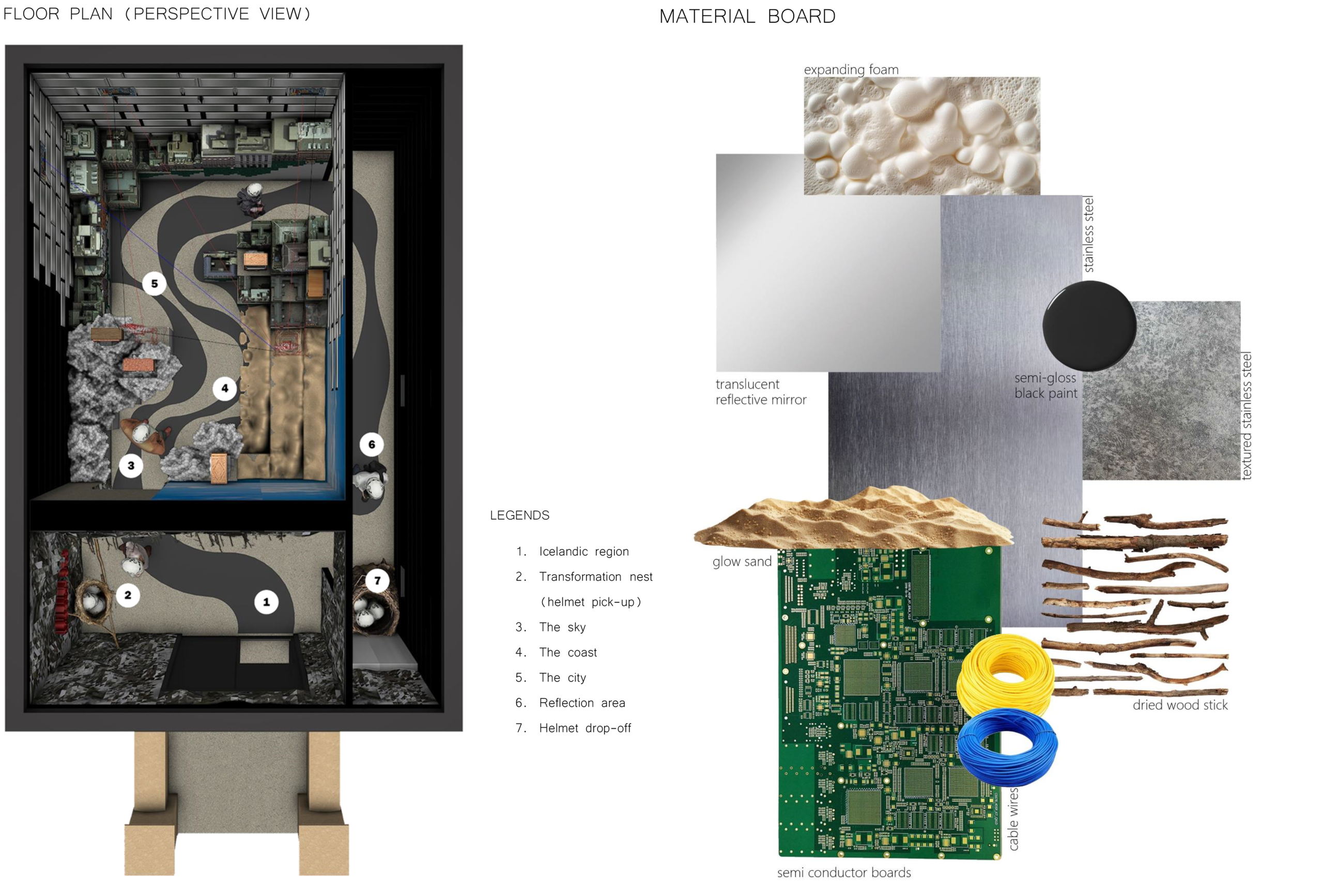
The Translation Chamber is entered at a single point: a narrow threshold that marks the transition from the exterior world into the electromagnetic landscape of the substation site. At this point, visitors put on the Translation Helmet before proceeding. From this moment onward, their experience of the space is mediated by sound and visual signals from the EMF receiver’s helmet, which determine what they perceive rather than the room’s design.
Icelandic Region (Zone 1) → Sky (Zone 2) → Coast (Zone 3) → Glasgow City (Zone 4) → Reflection (Zone 5)
 The sequence of five zones is linear and directional, mirroring the Redwing’s migration corridor. There is no looping back. Movement through the space is one-way, from the cool quiet of the Iceland origin zone through progressively increasing electromagnetic interference to the disorientation of the city zone and finally to the stillness of the reflection area. Exit is made through a second threshold at the opposite end of the space, where visitors remove their helmets and return to the unmediated electromagnetic environment of the exterior. The floor plan follows the interference-zone geometry derived from the iron filings and water-ripple experiments. Zone boundaries are not orthogonal walls but curved gradient thresholds.

 Interior design has historically centered the human body as its unit of measure. This project does not. The Translation Chamber asks what happens when the design brief is written by a migrating bird with a failing compass, and whether a discipline that has never asked that question before is ready to begin.